
How internet protocol is quietly replacing the cable box — and what it means for how the world watches TV.
8 min read · Technology deep-dive · April 2025
For decades, watching television meant plugging into a cable or satellite system — paying for a bundle of channels you mostly never watched, at a price that climbed every year. Then came streaming. And now, quietly disrupting both: IPTV.
IPTV — Internet Protocol Television — delivers live and on-demand video over the same internet infrastructure we use to send emails and load websites. No satellite dish. No coaxial cable. Just a broadband connection and a compatible device.
“IPTV doesn’t just change how television is delivered — it changes what television can be: interactive, personalised, and always on-demand.”
By the Numbers: A Market on the Move
| Metric | Figure |
|---|---|
| Global IPTV market size by 2028 | $107 billion |
| Projected annual growth rate (CAGR) | 9.8% |
| Global IPTV subscribers in 2024 | 285 million+ |
Cable subscriptions have been declining for the better part of a decade. IPTV is one of the primary beneficiaries — and it’s growing fast everywhere from North America to Southeast Asia.
How Does IPTV Actually Work?
Traditional broadcast TV sends a signal to everyone simultaneously — whether you’re watching or not. IPTV flips that model. Video is encoded, compressed, and sent over IP networks as data packets — but only when you request it and only to you.
There are three main delivery modes:
Live IPTV
Real-time streaming of broadcast channels — news, sports, live events — over the internet rather than satellite or cable.
Video on Demand (VOD)
A library of content the viewer requests at any time. Think Netflix, but built directly into an IPTV service ecosystem.
Time-Shifted TV
Catch-up and restart features — watch a programme from the beginning even if you tuned in late, or replay last night’s show.
Near Video on Demand (NVoD)
Scheduled content broadcast at staggered intervals so viewers don’t have to wait long — a bridge between live and true VOD.
What Makes IPTV Different from Regular Streaming?
This is where people often get confused. Netflix and Disney+ are streaming platforms — but they’re not IPTV in the strict sense. IPTV typically refers to managed IP-based TV services, often provided by telecoms or dedicated providers, with a focus on live television alongside VOD.
Key advantages IPTV holds over traditional delivery:
- Two-way interactivity — pause, rewind, and interact with content directly
- Personalised content recommendations and user profiles
- Lower infrastructure cost for providers (inIPTV: The Future of Television Is Already Hereternet vs. broadcast towers)
- Multi-screen support — watch on TV, tablet, phone, or laptop seamlessly
- Integration with other inte# IPTV: The Future of Television Is Already Here
How internet protocol is quietly replacing the cable box — and what it means for how the world watches TV.
8 min read · Technology deep-dive · April 2025
For decades, watching television meant plugging into a cable or satellite system — paying for a bundle of channels you mostly never watched, at a price that climbed every year. Then came streaming. And now, quietly disrupting both: IPTV.
IPTV — Internet Protocol Television — delivers live and on-demand video over the same internet infrastructure we use to send emails and load websites. No satellite dish. No coaxial cable. Just a broadband connection and a compatible device.
“IPTV doesn’t just change how television is delivered — it changes what television can be: interactive, personalised, and always on-demand.”
By the Numbers: A Market on the Move
| Metric | Figure |
|---|---|
| Global IPTV market size by 2028 | $107 billion |
| Projected annual growth rate (CAGR) | 9.8% |
| Global IPTV subscribers in 2024 | 285 million+ |
Cable subscriptions have been declining for the better part of a decade. IPTV is one of the primary beneficiaries — and it’s growing fast everywhere from North America to Southeast Asia.
How Does IPTV Actually Work?
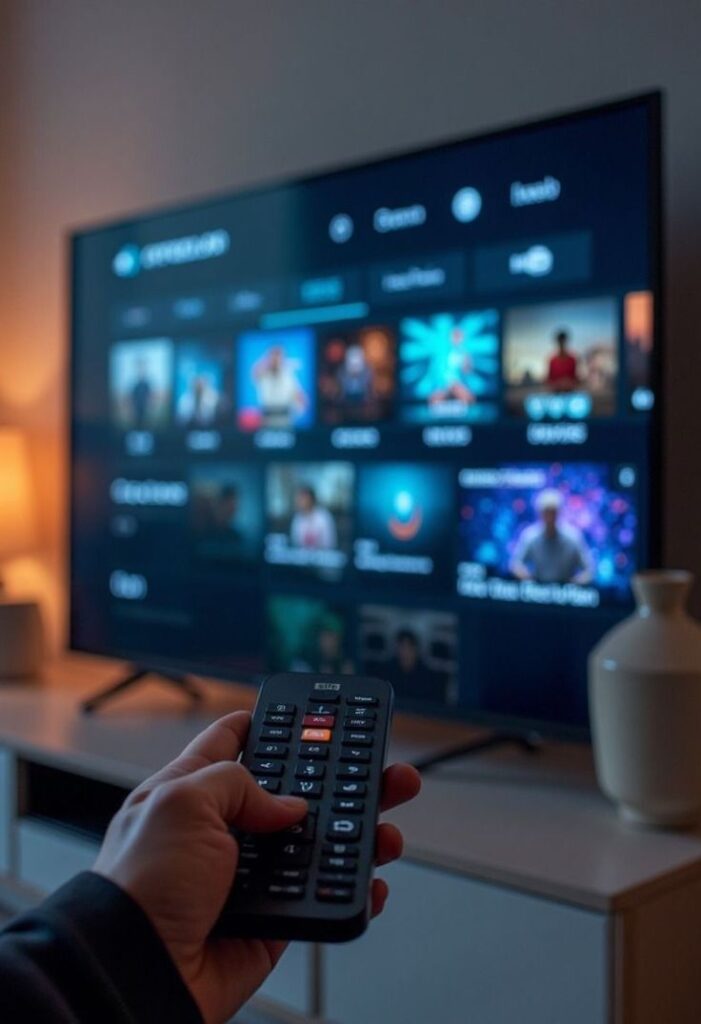
Traditional broadcast TV sends a signal to everyone simultaneously — whether you’re watching or not. IPTV flips that model. Video is encoded, compressed, and sent over IP networks as data packets — but only when you request it and only to you.
There are three main delivery modes:
Live IPTV
Real-time streaming of broadcast channels — news, sports, live events — over the internet rather than satellite or cable.
Video on Demand (VOD)
A library of content the viewer requests at any time. Think Netflix, but built directly into an IPTV service ecosystem.
Time-Shifted TV
Catch-up and restart features — watch a programme from the beginning even if you tuned in late, or replay last night’s show.
Near Video on Demand (NVoD)
Scheduled content broadcast at staggered intervals so viewers don’t have to wait long — a bridge between live and true VOD.
What Makes IPTV Different from Regular Streaming?
This is where people often get confused. Netflix and Disney+ are streaming platforms — but they’re not IPTV in the strict sense. IPTV typically refers to managed IP-based TV services, often provided by telecoms or dedicated providers, with a focus on live television alongside VOD.
Key advantages IPTV holds over traditional delivery:
- Two-way interactivity — pause, rewind, and interact with content directly
- Personalised content recommendations and user profiles
- Lower infrastructure cost for providers (internet vs. broadcast towers)
- Multi-screen support — watch on TV, tablet, phone, or laptop seamlessly
- Integration with other internet services: social media, e-commerce, gaming
- Higher quality video (4K, HDR) over well-managed broadband networks
What Powers an IPTV System?
Behind every IPTV service is a layered technical architecture. Content is ingested, transcoded into adaptive bitrate streams (usually HLS or MPEG-DASH formats), stored or live-routed, and delivered via a content delivery network (CDN) to minimise latency. At the viewing end, a set-top box, smart TV app, or streaming stick decodes and renders the video.
The Electronic Programme Guide (EPG) is a crucial layer — it’s the channel grid that shows what’s on and when, and is often delivered as an XML-based data feed updated in real time.
Adaptive bitrate streaming means your IPTV service intelligently adjusts video quality in real time — fewer buffering spins, smoother picture, even on variable connections.
It’s Not Without Complications
IPTV’s growth has been shadowed by a significant grey market. Unlicensed IPTV services — offering thousands of channels and full VOD libraries for a few euros a month — have proliferated across the internet, raising serious copyright and legal concerns.
Legitimate IPTV providers, meanwhile, face their own hurdles:
- Broadband dependency — quality degrades on poor connections
- Content licensing negotiations are complex and regional
- Fierce competition — telecoms, tech giants, and startups all vying for the same living-room screen
The Bottom Line
IPTV is not a niche technology or a future concept — it’s here, it’s mainstream, and for much of the world it’s already the primary way people watch television. As fibre broadband expands globally and 5G matures, the last barriers to IPTV adoption are falling fast.
Whether you’re a consumer cutting the cable cord, a developer building streaming products, or a business evaluating media strategy — understanding IPTV is no longer optional. The signal has already switched.
Published April 2025 · Technology & Streamingrnet services: social media, e-commerce, gaming
- Higher quality video (4K, HDR) over well-managed broadband networks
What Powers an IPTV System?
Behind every IPTV service is a layered technical architecture. Content is ingested, transcoded into adaptive bitrate streams (usually HLS or MPEG-DASH formats), stored or live-routed, and delivered via a content delivery network (CDN) to minimise latency. At the viewing end, a set-top box, smart TV app, or streaming stick decodes and renders the video.
The Electronic Programme Guide (EPG) is a crucial layer — it’s the channel grid that shows what’s on and when, and is often delivered as an XML-based data feed updated in real time.
Adaptive bitrate streaming means your IPTV service intelligently adjusts video quality in real time — fewer buffering spins, smoother picture, even on variable connections.
It’s Not Without Complications
IPTV’s growth has been shadowed by a significant grey market. Unlicensed IPTV services — offering thousands of channels and full VOD libraries for a few euros a month — have proliferated across the internet, raising serious copyright and legal concerns.
Legitimate IPTV providers, meanwhile, face their own hurdles:
- Broadband dependency — quality degrades on poor connections
- Content licensing negotiations are complex and regional
- Fierce competition — telecoms, tech giants, and startups all vying for the same living-room screen
The Bottom Line
IPTV is not a niche technology or a future concept — it’s here, it’s mainstream, and for much of the world it’s already the primary way people watch television. As fibre broadband expands globally and 5G matures, the last barriers to IPTV adoption are falling fast.
Whether you’re a consumer cutting the cable cord, a developer building streaming products, or a business evaluating media strategy — understanding IPTV is no longer optional. The signal has already switched.